
My fascination with
Williams-Beuren syndrome started a few months ago when I saw a
documentary on that subject on the french CBC show Découverte. On the show, they interviewed people who had the disease, and talked about their unusual musical abilities. It turns out that they are really good at memorising music or singing, and that when they listen to music, their whole cortex lights up with activity, compared to very small limited regions in normal people. This is particularly surprising considering they have limited abilities to write or do maths because of their learning and memory problems. Yet they can sing a song after hearing it once, and use very advanced vocabulary when they speak. They also have difficulties with visuo-spatial perception, and motor skills and are hyper-social, meaning they have no social anxiety. Additionally they have characteristic
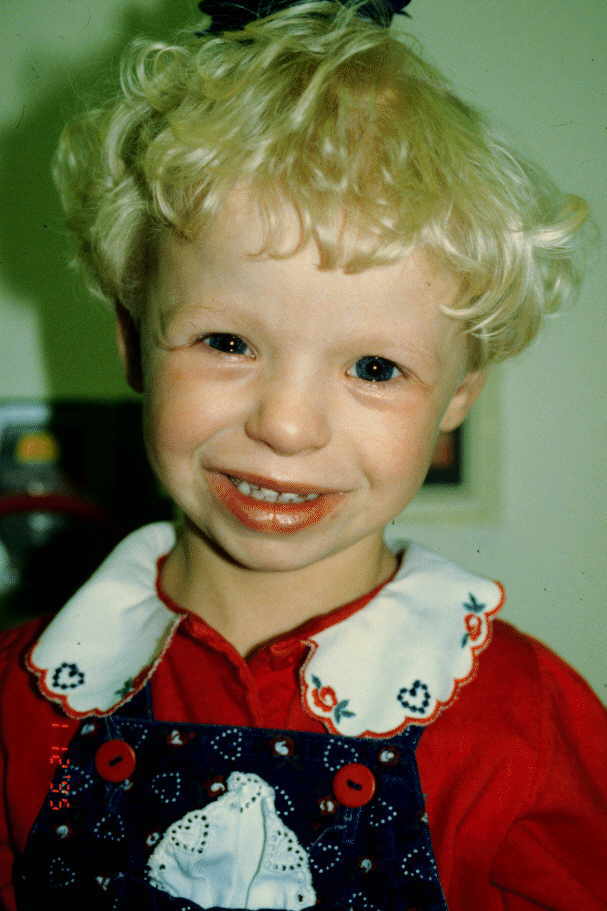
elfin-like facial features, like pointy ears, prominent cheeks and upturned nose and a short stature which have lead to the theory that they might be the origin of the folk tales about
pixies.
When you think about it, some of these features are quite unique, and they are all linked to a relatively small deletion affecting 20 or so genes on chromosome 7. The fact that gene dosing could be responsible to these striking changes in musical abilities, speech and social behaviour, things that are so characteristically human, is an incredible window into how genes dictate cognition. Additionally, while the syndrome was initially included in the autism spectrum disorder, the hypersocial aspect and the "islands" of cognitive strength are in stark contrast to what is observed in autism. Maybe we could we learn about social behaviour, empathy, and how the brain makes us social animals by comparing both diseases.
And so I started examining the genes which were hemizigous as a result of the disease. While a few genes are thought to contribute to the cognitive aspects of the disease, two really stand out: LIMK1 and ELN. They are part of the minimally deleted region that can give rise to the syndrome (since the size of the deletion varies from patient to patient). Elastin (eln) is a structural protein and its deficiency is linked to the cardio-vascular problems and to the facial features of the disease. LIMK1 is a kinase that is expressed in the brain and which regulates actin threadmilling (via cofilin) to allow synaptic plasticity and remodelling.
So I thought, maybe LIMK1 can tell us what is the neural substrate for cognitive processes that are affected by the disease such as social behaviour, musical abilities, visuo-spatial cognition etc... Using the
Allen brain project data, which we've spoke about on the blog in the past, I looked at where the gene is expressed in the brain. To my surprise it wasn't expressed in the cortex or the limbic system, the structures which are thought to regulate higher cognition and behaviour. Instead it was very limited to the brainstem (see my figure above). Yet all the studies done so far have focused on the hippocampus, the amygdala and the cortex, because that is where everyone expected the defects occurred. People with lesions in those areas have memory problems, social behaviour problems, so it was only natural to assume, that it was the neural substrate of the disease. After reading quite a bit about brain areas and behaviour I came across a few very rare papers dealing with the brainstem in cognition and behaviour. The authors suggested that maybe higher brain function is dependent on integration of incoming sensory signals (or outgoing motor signals) from the brainstem. If the brainstem doesn't do its job at pre-processing that information, the higher brain structures don't know how to deal with the signals, and how to relay it to the specialized areas like say the Broca area for speech for example. This in turn may explain why Williams patients have difficulties with motor skills, visuo-spatial integration. And so is behaviour also dependent on the brainstem? While I don't have the resources to prove it, I certainly think it's a possibility. After-all many primitive animals that have complex behaviour have a mostly brain-stem centric brain and underdeveloped cortex. The brain stem is responsible for the basic stuff like breathing, eating, vomiting so why not also of basic behaviour like anxiety...
Which leads me to my final point, if you restore the synaptic plasticity in the brainstem, can the brain adapt and the symptoms associated with Williams syndrome disappear? A recent paper in science (
Guy et al, 2007) demonstrated that restoration of MeCP2 expression post-nataly in mouse models of
Rett syndrome, can correct the neurological defects. This suggests that mental retardation syndromes which are not neuro-degenerative can be corrected and reversed. So I am very optimistic that one day, there will be therapies available to these people, or maybe even, that we might harness that knowledge to enhance our own brains. Have you ever wanted to have a musical brain?



 Podcast


4 comments:
Post a Comment