Saturday, February 27, 2010

Drinking and Flying

High tolerance, whether innate or a product of hard drinking, is a good idea for an animal, particularly if you're the 'prey' part of a predator-prey relationship. You won't make it very long if the slightest whiff of fermenting fruit sends you wobbling into the waiting jaws of a snake or owl. Fruit bats are one such creature that will eat fermented fruit and nectar.

The natural question is how much booze can a bat consume before drunkenness affects it's behaviour. Luckily, a recent paper in PLoS ONE has done the homework, as Ars Technica reports:
To test the fruit bat's alcohol tolerance, researchers from Canada gave two groups of bats, from a variety of different species, a sugar water drink. One of the group's drinks was spiked with 1.5 percent alcohol, and both groups were made to drink the same amount per gram of body weight. After waiting a short time, the bats were then released, whereupon they flew through an obstacle course. The researchers measured the time it took to get through the course and how often the bats collided with obstacles. In addition, the echolocation calls were recorded to see if those varied.
According to the research, a large portion had blood alcohol concentrations of 110mg per 100mL or greater, yet still maneuvered the course quickly, and without obstacle collision.

No word on how their performance was affected in other areas.


1 comments:

Thursday, February 25, 2010

Sarcasm

It's been said that sarcasm is the lowest form of wit, but it can actually be quite complex. Most people have been in a situation where a sarcastic remark is misinterpreted - a situation exacerbated when dealing with the written word stripped of tone and other cues. Over at The Frontal Cortex, Jonah Lehrer talks a bit about how the brain deals with it and processes reality:
Given the mental difficulties involved in deciphering sarcasm, it's interesting to note that the right hemisphere has been repeatedly implicated as an essential component of sarcastic processing. For instance, a 2005 study of patients with lesions to the ventromedial area of the right prefrontal cortex found that they exhibited severe deficits in understanding sarcastic speech, at least when compared to people with left PFC lesions. And then there's this 2008 study, which showed that people hear sarcasm better when it's presented to their left ear.
For some early examples of sarcasm, you need look no further than the bible, where the prophet Elijah taunts Baal worshipers to provide proof of their god (1 Kings 18:27):
At noon Elijah started making fun of them: "Pray louder! He is a god! Maybe he is day-dreaming or relieving himself, or perhaps he's gone off on a trip! Or maybe he's sleeping, and you've got to wake him up!"
There's a splash of irony there too.


2 comments:

Depressing Numbers for Grad Students

This has come up occasionally on the blog, but here are some sobering figures from an article in The Chronicle of Higher Education published last year (subscription required):
Studies have found that graduate school is not a particularly healthy place. At the University of California at Berkeley, 67 percent of graduate students said they had felt hopeless at least once in the last year; 54 percent felt so depressed they had a hard time functioning; and nearly 10 percent said they had considered suicide, a 2004 survey found. By comparison, an estimated 9.5 percent of American adults suffer from depressive disorders in a given year, according to the National Institute of Mental Health. Meanwhile, nearly a quarter of the graduate students surveyed were not aware of mental-health services on the campus. And another Berkeley study recently found that graduate students were becoming increasingly disillusioned with careers in academe and did not view large research institutions as family-friendly workplaces.
It goes on to state that of those who considered suicide, 47% didn't tell anybody and 52% did not seek professional help. That a quarter aren't aware of campus mental-health services certainly doesn't help.


2 comments:

Wednesday, February 24, 2010

Bear Fight!

Yesterday's Globe and Mail reports on research indicating that grizzly populations are starting to migrate into polar bear territory. This crossing has occurred in the past, as evidenced by the 2006 discovery of a polar-grizzly hybrid, but is becoming more frequent. This, of course, has re-ignited the age-old debate over which would win in a fight. From the article:
Dr. Rockwell, dedicated academic that he is, has pondered such a tilt at length. He believes the two bears would most likely come into contact around the peat banks that make the only decent denning ground within Wapusk National Park. Because polar bears only den when they're giving birth, the most possible scenario would see a weakened female take on a grizzly of either sex.

“If it's a fight between a 1,200-pound male polar bear and a 600-pound grizzly, I think we know who would win,” Dr. Rockwell said. “But in this likeliest of cases, it's debatable. There are actually reports in the literature where grizzlies have killed denning polar bear females.”
Naturally, non-experts are weighing in as well:
“Polar bears are used to eating seals which are easy prey, while grizzlys [sic] hunt lions,” wrote one dubiously informed member of a Yahoo message board.

At boxingforum.com, members have devoted 19 pages worth of comments to the prospective fight.
Bear baiting may not be dead after all.


1 comments:

Tuesday, February 16, 2010

Local Science: Caspase Activation and Differentiation

This seems to be all over the news this morning, but in case it was missed: researchers at the OHRI, led by Lynn Megeney, have found that caspase-3 induced DNA damage is required for differentiation into muscle fibre. As usual, Ed Yong at Not Exactly Rocket Science has a great summary of the PNAS paper and analysis.
But Larsen has found that stem cells deliberately break their own DNA by recruiting caspase-3 and CAD. This act of self-harm switches on important genes that are needed for differentiation; without it, the generalist cells can't specialise. This is an entirely new way of activating genes and it appears to be both important and widespread. [...] The myoblasts need these breaks to produce muscle fibres and to create the breaks, they rely on caspase-3 and its ability to activate CAD. Larsen managed to block the development of muscle fibres by dousing myoblasts with chemicals that neutralise caspase-3. The same thing happened if he used cells with mutant versions of CAD, which couldn't be activated. In both cases, the cells failed to show any signs of broken DNA.


3 comments:

Monday, February 15, 2010

NASA Announces New Mission


0 comments:

Thursday, February 11, 2010

Smoking Rolling and Cancer

Another recent stimulating conversation raised the following question: Do people whose livelihoods depend on hand rolling cigars have higher rates of cancer in their fingers or hands? Or, in other words, does handling tobacco affect your risk of certain cancers?

Unfortunately, there isn't much information out there on the subject. But here at the Bayblab we don't take "I don't know" for an answer, so rather than disappoint our reader here's what the literature has to say:

First off, most of the relevant research out there deals with cigarettes not cigars, but they seem a reasonable proxy to answer the original question. Secondly, there is very little dealing with rolling and not smoking.

Some background on roll-your-own (RYO) cigarettes - Compared to factory made cigarettes, smokers of RYO are exposed to similar carcinogen levels as measured by post-smoke metabolic markers. This is true both unadjusted and adjusted for variable such as puff duration, BMI and age. However in Canada, where 17% of smokers use RYO cigarettes, those smokers are less likely to quit, more addicted to nicotine and heavier smokers.

Smoking is known to have cutaneous effects such as poor wound healing, premature skin aging and of course oral cancers. Association with melanoma is inconclusive. However, in studies of melanomas on the palms and soles, there is actually in inverse correlation with smoking.

Again, this all has to do with smoking an not rolling. Presumably smokers have more skin contact with tobacco and tobacco smoke than non-smokers - think of the telltale yellow fingertips - yet have reduced incidence of melanomas in this area. This suggests that dermal contact with tobacco, while contributing to several other conditions, doesn't increase the risk of cancer in the finger or hand. Taking this, and despite the dearth of data on rolling alone, I will tentatively say that the people hand rolling your cigars on your next trip to Cuba are not at considerable increased risk of 'finger cancer'. But I will await the definitive study.


To read more about cancer and cancer research, check out the latest edition of the Cancer Research Blog Carnival that went up at Health and Life on Friday.


0 comments:

Sunday, February 07, 2010

Penspinning

I worked with a Japanese postdoc on the human genome project in Toronto in 2000. He would constantly be twirling his pen in his hand absent mindedly while he talked to me. I asked him about how he did it and he told me that I should not bother and that he thought of it as a bad habit. A few months later I could do some basic penspinning and it did indeed become a bad habit. In fact my thumb aches while I do it, but still I do it while thinking.
Check these guys out:
World Pen spinning championships from Hong Kong.

H/T Boingboing.


2 comments:

Tuesday, February 02, 2010

Newsflash: scientific publishing is controlled by cliques

14 leading stem cell scientists have written an open letter criticizing the undue influence of small groups of scientists on what gets published in journals. Of course this is not news to anyone in the field, and a pervasive problem in science.

Here are some excerpts and opinions of the letter:

" Stem cell experts say they believe a small group of scientists is effectively vetoing high quality science from publication in journals.In some cases they say it might be done to deliberately stifle research that is in competition with their own. "

" The journal editor decides to publish the research paper usually when the majority of reviewers are satisfied. But professors Lovell-Badge and Smith believe that increasingly some reviewers are sending back negative comments or asking for unnecessary experiments to be carried out for spurious reasons. In some cases they say it is being done simply to delay or stop the publication of the research so that the reviewers or their close colleagues can be the first to have their own research published. "

" "Editors should be able to see when reviewers are asking for unnecessary experiments to be carried out and if it's the difference between an opinion of the referee and a factual problem. But what tends to happen is that the editor takes the opinion of an editor rather than the factual substance," he said. One of the main reasons for this, according to Professor Smith, is that journals are in competition. Editors have become dependent on favoured experts who both review other people's stem cell research and submit their own papers to the journal. If the editor offends these experts, they may lose future papers to a rival. This is leading to the journals publishing mediocre science, according to Professor Lovell-Badge. "


3 comments:

Thursday, January 28, 2010

Infrequent fliers and cancer


Fun with correlational studies: How often should you fly in order to minimize your risk of developing cancer? Clearly flying very frequently is not a good idea since the risk of certain cancers is increased in airline flight crew. This makes perfect sense since airplanes fly at high altitude where there is greater exposure to cosmic radiation, and we all know that radiation exposure increases your risk of developing cancer.
There is, however a contradictory correlation, that people living at higher altitudes experience lower rates of cancer. This was a surprising finding which led to the hypothesis that the thinner air at higher altitudes offered some protection, perhaps having something to do with oxygen free radicals. This seems unlikely to me since, at altitudes that people inhabit there is no change in air composition with altitude. The air is thinner but the relative amount of oxygen does not change. Since we know that intermediate radiation doses can be protective for certain cancers, would it not make sense that the higher doses of radiation at higher altitudes be protective?
I suggest that a devious airline (with no respect for privacy) and an American health insurance company (which has little respect for anything but money) join forces and use frequent flier miles and see if there is an amount of flying that protects against some types of cancer.


0 comments:

Thursday, January 21, 2010

Things they don't tell you in school

"We do not need more scientists, but academic science as practiced depends on a large surplus of expendable trainees (grad students and postdocs) who have to believe that a career in research is an attainable goal. This creates an overtrained, underemployed workforce, but the alternative is to make "trainee" type research positions professional positions, which would be expensive. First, because you would have to offer real salaries and benefits, and second you could not create the illusion that working 80 hour weeks for 40,000 a year is going to someday get you your own lab, meaning less work out of each employee."
From a comment here via this post


1 comments:

Tuesday, January 19, 2010

Dental Cancer

An interesting conversation on the weekend somehow made its way to teeth and whether there were particular kinds of oral cancer specific to the tooth. Maybe our dentist readers can fill in some knowledge gaps here.

Tooth enamel has no living cells and so, unlike bone, cannot repair itself or become cancerous. However, the tooth does have living cells in the dental pulp, so perhaps they may be susceptible to transformation and uncontrolled growth. Clearly the easy answer would be to consult Pubmed. An even easier solution is finding the one paper that already did that for you, in this case a paper in The Lancet Oncology entitled Teeth: malignant neoplasms in the dental pulp? From the abstract:
[U]sing the search phrase “dental pulp” combined with “sarcoma”, “carcinoma”, or “neoplasms” in PubMed when using the MeSH search mode yielded no reports on primary malignant neoplasms. However, a hand search yields clinical reports on pulpal tumours that were published over a century ago.
OK, so tooth tumours do happen - or did over a century ago. Why aren't there any today? Water fluoridation? The authors offer some thoughts about that:
Because of the restricted space in a tooth, tumour expansion will probably lead to the formation of irritation dentine by secondary odontoblasts and, subsequently, to a haemorrhage infarct of the pulp. One hypothesis states that a purported neoplasm of the dental pulp leads to a chronic appositive pulpitis and–sooner or later–will be treated likewise by root-canal treatment or extraction.
So dental cancers may be happening with some frequency but manifesting and being treated as other conditions. Or maybe the dentists really know what's going on and would rather pocket the treatment fees themselves rather than referring patients for radiation and chemo. They are, after all, in the pocket of Big Floss.


1 comments:

Monday, January 18, 2010

Cancer Carnival: Call for Posts

The 30th edition of the Cancer Research Blog Carnival is coming up in a couple of weeks. We have a great host, Health and Life lined up, where it will appear on Friday, February 5th. That's plenty of time to write something new, or submit a recent cancer-related post. Submissions can be made on this form.


1 comments:

Wednesday, January 13, 2010

Open Lab 2009

The Open Laboratory 2009 is an anthology of 50 blog posts selected and judged as the best science blogging of the year. This year saw 760 entries, and for the second year in a row I'm proud to have one of my posts, Good Head, deemed worthy for inclusion. The final list of posts can be found here. Many thanks to editor SciCurious, Bora Zivkovic and all of the judges!


3 comments:

Tuesday, January 12, 2010

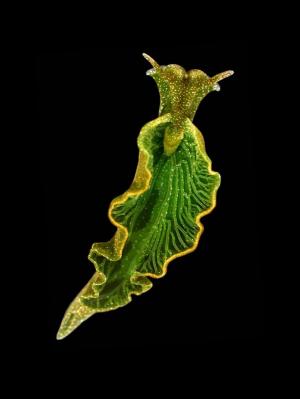
Slug acquires photosynthetic genes

Evolution will never cease to amaze me: scientists have found a slug who can make its own chlorophyll!

"Shaped like a leaf itself, the slug Elysia chlorotica already has a reputation for kidnapping the photosynthesizing organelles and some genes from algae. Now it turns out that the slug has acquired enough stolen goods to make an entire plant chemical-making pathway work inside an animal body, says Sidney K. Pierce of the University of South Florida in Tampa.

The slugs can manufacture the most common form of chlorophyll, the green pigment in plants that captures energy from sunlight, Pierce reported January 7 at the annual meeting of the Society for Integrative and Comparative Biology. Pierce used a radioactive tracer to show that the slugs were making the pigment, called chlorophyll a, themselves and not simply relying on chlorophyll reserves stolen from the algae the slugs dine on."


3 comments:

CCRG doctor finally busted

Those of you who have followed the saga of foul-mouthed, vitamin-peddling quack extraordinaire "Dr Hope" who runs the "Canadian Cancer Research Group" which despite the name has yet to show any proof that their expensive miracle alternative treatment has any benefit to cancer patients, will find solace in the recent news that the only doctor working at that "clinic" will most likely have his license suspended:

"According to the document released Wednesday, O'Shea is also accused of failing to properly gain consent from patients, failing to examine patients before prescribing treatment or medication and failing to communicate with patients' primary health care providers.

O'Shea is scheduled to appear at the College of Physicians and Surgeons' Toronto headquarters Jan. 26. If he is found to have violated professional standards, O'Shea could lose his license to practise medicine and face a fine of up to $35,000."

Now only Bill remains to be taken down, and we know the competition bureau is on the case, but it is much harder since he is not a physician. Too bad he is quick to threaten everyone with lawsuits yet wont defend himself by returning calls from the Ottawa Citizen...


1 comments:

Off with their Heads!

I've written before about a possible beneficial side effect to circumcision - the reduction in HIV infection risk.

In an effort to identify other changes in circumcised penises (other than the obvious), and to drum up business for the local mohel, scientists have examined differences in the penis microbiome in a recent paper published in PLoS ONE. They conclude:
The anoxic microenvironment of the subpreputial space may support pro-inflammatory anaerobes that can activate Langerhans cells to present HIV to CD4 cells in draining lymph nodes. Thus, the reduction in putative anaerobic bacteria after circumcision may play a role in protection from HIV and other sexually transmitted diseases.
While the main thrust of the paper is the reason for the previously mentioned HIV risk reduction, there are some other interesting outcomes for the reduced numbers of an anoxic environment and the corresponding bacteria. Mike the Mad Biologist has more:
This seems to be a much more compelling finding: circumcision might reduce bacterial vaginosis. While bacterial vaginosis isn't dangerous except in very limited circumstances, it still is a nuisance. To me, that's the compelling finding, although vaginas probably make news editors giggle, so that's probably why vaginosis wasn't covered.
Somehow I still don't think people will be queueing up...


2 comments:

Friday, January 08, 2010

An Inconvenient Sponsor?


GlaxoSmithKline is going to finance a documentary about obesity. A good documentary on obesity is probably overdue and has the potential to be very interesting to me. An article in the New York Times has some more details about the movie and the controversy around Glaxo as a financial backer and the potential for this documentary to be a disguised infomercial for Alli, Glaxos over the counter weight loss drug. You may know alli from it's famous side-effects. Excreting dietary fat can get ugly.
The comparisons to An Inconvenient Truth from the NYT article are interesting since obese people serve an important role as a carbon sink.


1 comments:

Saturday, January 02, 2010

Darwinian Evolution of Prions

Here is an original article describing the phenomenon of prion evolution in Science magazine. It would seem that this is the first example of evolution that is distinct from genetics. I haven't read the article in detail but cjdblogger has a decent summary.


2 comments:

Friday, January 01, 2010

Cancer Carnival #29

Happy New Year, and welcome to the first Cancer Research Blog Carnival of 2010. It will be a light one - the holiday season kept us all busy - but there's still some good stuff to be had. We also have some new hosts lined up in the new year starting next month at Health and Life.

In fact, we'll kick things off with a post from that blog, comparing Tamoxifen to Arimidex as adjuvant therapy for cancer.
There has been a lot of debate about how to prevent cancer from coming back in post-menopausal women after initial treatment. We discussed in our comparison of Tamoxifen with aromatase inhibitors the debate in general, and now will analyze Tamoxifen vs Anastrozole, brand name Arimidex, directly.
The author, David, does a nice job of summarizing various studies comparing the two drugs. The blog itself features a large amount of cancer blogging, much of it from a pharmacological point of view and looks to be a nice resource for health information in general, and drug uses and side effects specifically.

Next up GeriPal responds to news stories that morphine and other opiates may promote cancer growth and spread with some research blogging
This is an interesting line of research and one that gave the makers of Relistor a shot in the arm (as one website put it – “a possible new indication for Progenix's Relistor could revive its fortunes”.) I find the pathophysiology behind this incredibly interesting from an academic standpoint, however it is neither something that would warrant such dramatic headlines nor spur thoughts that it is anything but research in its infancy.
As usual, the headlines don't tell the full story, but GeriPal has it, so click through to find out the real deal.

Something we don't often think about while focussing on human disease is cancer in animals. PetPip reminds us that pets get cancer too, and how to cope.

Speaking of animals with cancer, one favourite from past carnivals has been the transmissible tumours among tasmanian devils. A recent paper in Science has determined the origins of these tumours, as Carl Zimmer describes in the New York Times
When the tumor disease was discovered, many scientists assumed that it was caused by a rapidly spreading virus. Viruses cause 15 percent of all cancers in humans and are also widespread in animals.

But subsequent studies failed to turn up a virus. Instead, Anne-Maree Pearse and Kate Swift, of the Department of Primary Industries, Water and Environment in Tasmania, discovered something strange about the tumor cells. The chromosomes looked less like those in the animal’s normal cells and more like those in the tumors growing in other Tasmanian devils.
The full story is pretty fascinating, and worth the read. Razib Khan at Gene Expression adds a bit more, commenting on the dire predictions for the devil's demise and pointing out that some animals are, in fact, immune.

That's it for this month's Cancer Research Blog Carnival. For older editions, visit the Carnival Homepage. Don't forget, the CRBC has subscription options; you can follow by email or RSS feed. An aggregated feed of credible, rotating health and medicine blog carnivals is also available.


1 comments: