Showing posts with label evolution. Show all posts

Tuesday, January 12, 2010

Slug acquires photosynthetic genes

Evolution will never cease to amaze me: scientists have found a slug who can make its own chlorophyll!

"Shaped like a leaf itself, the slug Elysia chlorotica already has a reputation for kidnapping the photosynthesizing organelles and some genes from algae. Now it turns out that the slug has acquired enough stolen goods to make an entire plant chemical-making pathway work inside an animal body, says Sidney K. Pierce of the University of South Florida in Tampa.

The slugs can manufacture the most common form of chlorophyll, the green pigment in plants that captures energy from sunlight, Pierce reported January 7 at the annual meeting of the Society for Integrative and Comparative Biology. Pierce used a radioactive tracer to show that the slugs were making the pigment, called chlorophyll a, themselves and not simply relying on chlorophyll reserves stolen from the algae the slugs dine on."


3 comments:

Monday, August 24, 2009

Religion Doesn't Kill People; People Kill People

I recently caught Robert Wright talking to Charlie Rose about his book "The Evolution of God". I thought he had some interesting things to say, though I haven't read the book. You can check it out the interview for yourself here.

His basic point is that religion is not the root of all evil (ie Sept. 11, Iraq war) as the neo-atheist totalitarians Dawkins and Hitchens would have you believe. He argues that religious doctrines evolve to meet the basic biological needs of their followers. He points out the fact that scriptures of all religions are full of obvious contradictions that give them the flexibility to adapt to changing enivronments. When leaders need to rally the troops to "kill the infidels", the appropriate scripture verse is at hand. Likewise when it's time to "love all men as God's creatures" a different verse from those same scriptures provides justification.

If not religion, what is the root of all evil? Wright alludes to what I think is a much more scientific explanation. Human behavioiur is simply driven by competition for finite resources. In this respect, we are no different than any other living organism. When our bellies are full and survival is a given, we all get along. Everyone can be part of the in-group. Philosophers write about the virtues of tolerance. When conditions are not so good and people start to starve, it's another story. Every man for himself. Tribalism rules the day. The all encompassing in-group breaks down and leaders of smaller tribes look for rationale to villify and exterminate the others. In good times or bad, religious scriptures provide group cohesion by justifying whatever behaviours the circumstances demand.

I'm not totally sure this is what Wright was getting at, but it's my interpretation. The behaviour of all living organims, humans included, is governed by basic survival, not by cultural cues. Don't buy it? Try witholding a meal or two from your cat...then try it with a human child...and watch peaceful co-existence go out the window. Sure we like to blab a lot about WHY we do certain things. It's the will of God, or whatever. We humans are the blabbiest much of monkeys to ever walk the Earth. Our painfully acute sense of self- and social-awareness demands that we constantly talk about everything we do and why we do it. We are moralizers, justifiers and rationalizers. But being self-aware and telling all about it does not equal self-determination. Ask Hannibal Lecter. The evolutionary chain of causation that determines our behaviour is not altered just because we loud-mouthed humans have the capacity to provide a self-affirming running narrative to anyone who will listen.

Wright's second major point is that religions currently need to and can re-invent themselves to promote harmony in a globalized society. He seems to think the way to get to a more scientifically correct religion is to put purpose back into evolution. That is, evolution unfolded as it did because God rigged up the universe to make it so. He makes this argument in a recent NYT piece. Evolutionary biologist Larry Moran is skeptical (more here); and it's hard not to agree with him. There is no evidence that evolution is directional (what about convergent evolution?). But is there evidence that it isn't ("junk" DNA)? I think this one ends in a draw.

Anyhow regardless of what you think about God, I think it's OK and even desirable for scientists to tolerate religion rather than try to exterminate it from the planet. And shift their attention away from cultural noise and back to the serious biological problems humanity faces. Feeding the world...population control...the end of oil...any takers? I can hear Hitchens already..."Hmmm...that sounds hard...can't we just go back to using big words to make fun of Creationists and blame them for all the problems?"


1 comments:

Tuesday, March 24, 2009

Quack of the Week: His "Holiness" Pope Benedict XVI

AIDS "cannot be overcome through the distribution of condoms, which even aggravates the problems".

- Pope Benedict XVI, recent message to Africans

Is this man really so ignorant about the basic facts of biology? I doubt it, but I bet he's hoping potential new recruits from Africa are. Maybe some teaching about evolution would be of use here? Maybe the drive to reproduce has more to do with mutation and our ancestor's success in passing on offspring and less to do with Satan and his condoms? Just a thought. Guess that's the problem with putting a 90-year-old virgin on the soapbox. And what's up with the dress?

Hopefully sensible catholics are smart enough to ignore this idiot.


12 comments:

Thursday, November 06, 2008

Junk DNA and Transposon Driven Evolution

A press release out of the Genome Institute of Singapore is claiming a function for junk DNA. The researchers show that a number of transcription factors bind repeats found in transposable elements.
More than 50 percent of human DNA has been referred to as "junk" because it consists of copies of nearly identical sequences. A major source of these repeats is internal viruses that have inserted themselves throughout the genome at various times during mammalian evolution. [...] The researchers showed that from 18 to 33% of the binding sites of five key transcription factors with important roles in cancer and stem cell biology are embedded in distinctive repeat families.
Now I could be wrong, but I thought we already knew that portions of these transposable elements acted as transcription factor binding sites (for example see here) so I don't think Larry over at Sandwalk is going to have to revise his estimates of junk DNA percentage yet. But what about the "deflated ego problem"? Is this an answer to Larry's excuse #5: that humans are more complex than other organisms in spite of similar gene numbers because of more complex regulatory mechanisms? Unfortunately I don't have access to the paper, but the press release and abstract seem to think so.
Over evolutionary time, these repeats were dispersed within different species, creating new regulatory sites throughout these genomes. Thus, the set of genes controlled by these transcription factors is likely to significantly differ from species to species and may be a major driver for evolution.
The argument here isn't for more complex gene regulation in humans, but rather different regulation depending on where these elements landed in early evolutionary history.


1 comments:

Friday, September 19, 2008

The Evolution of Assholes

No, I don't mean Denis Leary. In an article in Nature [Nature News summary], two scientists from the University of Hawaii try to tackle the burning question of the origin of the anus.
Today, two evolutionary biologists have published genetic evidence in Nature that they claim refutes the leading theory of anal evolution. Their work suggests that the anus may have evolved multiple times in many different organisms, and they propose that, in some lineages, the anus may have formed through a fusion of the gut with the reproductive organs.
Current theory holds that in early organisms with one hole (a mouth used for both eating and excretion - imagine the aftertaste!) the mouth eventually separated into two orifices, one of which gradually to migrated to the opposite end (anus next to the mouth? - imagine the smell!).

The new study examined developmental gene expression patterns in worms. They found that in both worms with one 'hole' and those with both a mouth and an anus, the same genes were involved in forming the mouth. However anus-forming genes were different, contrary to what would be expected if the anus branched off from the mouth. Similar 'backside' genes were also expressed at the posterior of the no-asshole worm - one of them in the reproductive tract. This led to the suggestion that rather than branching from the mouth, the reproductive organs may have evolved first and then joined with the gut - think cloaca.


0 comments:

Thursday, September 18, 2008

The origin of evolution

I found this rather neat paper in PNAS on how natural selection and evolution actually predate the origin of life. If you assume that to be alive you must require the conditions of being able to replicate and evolve, than you have to wonder which came first. According tho their model, not only did abiotic information systems undergo natural selection but evolution favored the emergence of replication. It's a short read if you understand mathspeak (which I don't), but here's the gist of it from the concluding paragraph....

Traditionally, one thinks of natural selection as choosing
between different replicators. Natural selection arises if one type
reproduces faster than another type, thereby changing the
relative abundances of these two types in the population. Natural
selection can lead to competitive exclusion or coexistence. In the
present theory, however, we encounter natural selection before
replication. Different information carriers compete for resources
and thereby gain different abundances in the population.
Natural selection occurs within prelife and between life and
prelife. In our theory, natural selection is not a consequence of
replication, but instead natural selection leads to replication.
There is ‘‘selection for replication’’ if replicating sequences have
a higher abundance than nonreplicating sequences of similar
length. We observe that prelife selection is blunt: Typically small
differences in growth rates result in small differences in abundance.
Replication sharpens selection: Small differences in
replication rates can lead to large differences in abundance


4 comments:

Monday, April 21, 2008

How can chromosome numbers change?

The question:
How did life evolve from one (I suspect) chromosome to... 64 in horses, or whatever organism you want to pick. How is it possible for a sexually reproducing population of organisms to change chromosome numbers over time?
For the answer read this.


0 comments:

Wednesday, April 16, 2008

Random Genetic Drift

The anti-evolution film Expelled: No Intelligence Allowed is being released on Friday and the US National Centre for Science Education site Expelled Exposed has gone live. The site is a point-by-point examination and de-bunking of the claims made in the film. The site hit Digg and is currently working out the high traffic issues, but some of the comments at Digg were interesting.

I am not an evolutionary biologist, but the comments seemed off. Most of the pro-science commenters there equate evolution with Darwinism - that is, speciation by mutation and natural selection. Natural selection is one evolutionary mechanism - indeed, the one people are most familiar with - but it is not the only one. Larry Moran at Sandwalk kicked off a bit of a discussion of this when he asked his readers to define evolution, and many different ideas were kicked around. Larry also has a nice explanation of one of those mechanisms, random genetic drift, in a piece at talkorigins.org. From the article:
"If a population is finite in size (as all populations are) and if a given pair of parents have only a small number of offspring, then even in the absence of all selective forces, the frequency of a gene will not be exactly reproduced in the next generation because of sampling error. If in a population of 1000 individuals the frequency of "a" is 0.5 in one generation, then it may by chance be 0.493 or 0.505 in the next generation because of the chance production of a few more or less progeny of each genotype. In the second generation, there is another sampling error based on the new gene frequency, so the frequency of "a" may go from 0.505 to 0.510 or back to 0.498. This process of random fluctuation continues generation after generation, with no force pushing the frequency back to its initial state because the population has no "genetic memory" of its state many generations ago. Each generation is an independent event. The final result of this random change in allele frequency is that the population eventually drifts to p=1 or p=0. After this point, no further change is possible; the population has become homozygous. A different population, isolated from the first, also undergoes this random genetic drift, but it may become homozygous for allele "A", whereas the first population has become homozygous for allele "a". As time goes on, isolated populations diverge from each other, each losing heterozygosity. The variation originally present within populations now appears as variation between populations." (Suzuki, D.T., Griffiths, A.J.F., Miller, J.H. and Lewontin, R.C. in An Introduction to Genetic Analysis 4th ed. W.H. Freeman 1989 p.704)
(A quote of a quote? How meta.) I think some of the numbers were miscopied from Suzuki et al. so I've changed them here, but it isn't the actual numbers that are important so much as the concept. Read the full article, it's quite informative and covers a variety of examples of genetic drift.


1 comments:

Friday, April 11, 2008

Answers and Winners of the Bayblab's Animal Evolution Challenge!

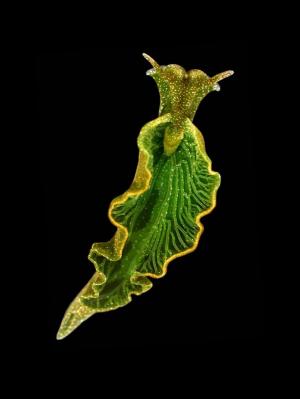
Ok people, as promised it’s time for the answers to the Bayblab’s recent evolution challenge! The task was to determine whether certain organisms were more, less or equally related to us humans than the model organism Drosophila melanogaster. Thanks to everyone who gave the challenge a shot, to Nimravid and Larry Moran for sending over participants from their blogs (both worth checking out). As many of you noticed, this seemingly simple task is a lot more difficult than it seems on first glance (and second, third and fourth glances). That was the point. I certainly would have flunked the challenge had I not myself devised it whilst staring at a phylogenetic tree. (Even with the tree I find it difficult). I was interested to see how others would fare.

I chose the comparison to Drosophila for two reasons. First it is an intensely-studied model organism. This means that Drosophila geneticists are constantly trying to convince us that their flies are virtually identical to humans (due to evolutionary conservation of molecular pathways and so forth) and therefore highly relevant to biomedical research. Second, many of the obvious physical characteristics of arthropods like Drosophila confound their true evolutionary relationship to humans and vertebrates in general. Until recently, I had a vague notion in my head that flies belonged to some sort of phylogenetic group of things with limbs, bodies, heads and eyes. It was just that flies don’t have backbones, and we do. I remember being shocked a couple years ago when a visiting speaker declared that sea urchins were a better model for studying development because they were so much more related to us than D. melanogaster. Turns out she was right. According to phylogeny, it would seem that many of the macroscopic similarities between humans and flies are examples of parallel or convergent evolution.

So this brings me to the main point of the challenge and the key to solving most of the questions. Drosophila melanogaster and Homo sapiens belong to phyla from opposite sides of two major branches of the animal tree, the deuterostomes and the protostomes. These lines split off from a common bilateran ancestor around 670 million years ago. The main features that distinguish these groups of phyla are embryological, like which hole becomes the anus and so forth.

At any rate, D. melanogaster belongs to the arthropoda (insects), which share a common protostomian ancestor with a diverse crowd of phyla that includes the molluscs (ie clams, snails, squid, octopuses) the nematodes (roundworms) and annelids (earthworms, leeches). On our side (the deuterostomes) we have the chordates (includes all animals with notochords like the tunicates and the lancelet, as well as all vertebrates) as well as the echinoderms (includes the sea urchin, starfishes and sea cucumbers).

So with this in mind most of the questions can be answered. Deuterostome species share a more recent common ancestor with each other than they do with the protostomes, so we are more similar to each other than to D. Melanogaster (a protostome). Falling in to this category are 1) starfishes, 2) the spotted salamander 7) the tunicate, Botrylloides violaceus, 8) the lancelet and 10) the yellowfin tuna. On the other hand, sharing a more recent common ancestor with the arthropods, other members of the protostomians are likely to be (roughly) equally similar to us as D. melanogaster is. So equally similar are 4) the common snail and 9) the roundworm C. elegans.

So this leaves: 3) the Palau stinging jellyfish, 5) Trichoplax adhaerens and 6) the cloud sponge, Aphrocallistes vastus. Both we and our protostomian cousins parted ways with these guys before the proto/deuterostome split. So both we humans and Drosphila share a common triploblastic bilateran ancestor that they do not. The major phylum falling into this category is the Cnidaria (jellyfish, corals, anemones). Our ancestry with the Porifera (sponges) and Placozoans (ie the peculiar Trichoplax adhaerens) appears to be an even more ancient one. So, the remaining species 3), 5), 6) are less related to us humans than D. melanogaster is.So, to summarize, the correct answers are as follows:

1) more related to humans D. melanogaster (starfish)

2) more related (salamander)

3) less related (jellyfish)

4) equally related (snail)

5) less related (Trichoplax adherens)

6) less related (sponge)

7) more related (tunicate)

8) more related (lancelet)

9) equally related (roundworm, C. elegans)

10) more related (yellowfin tuna)

11) equally related (squid)

And the winner is…

A three way tie! Between Adrian Thysse FCD, michaelf and windy. Congratulations guys! You got all 11 questions correct. Very impressive. (You must be geniuses, evolutionary biologists, or both). You get to split the karma!

And the runnner up is...Rebecca! Rebecca got only one wrong (#11) and was the fastest to buzz in. Fast and accurate. Very nice. Congratulations to you as well!

Anyway these are the correct answers as I (a lowly “biomedical researcher”) understand phylogeny based mainly on my interpretation of Mayr (What Evolution Is, Mayr 2001). The most recent molecular data as discussed a current Nature paper, (HT windy and Nimravid) seems to support them. (A beautiful animal phylogenetic tree from that paper is available here. Great poster for your wall!) Nonetheless, if anyone has a grievance and wants to make their case, bring it!

Stay tuned, as I’ll be adding a breakdown of the “class’s” answers. This should be interesting. Also, I hope to discuss what this all means with respect to the relative value of Drosophila as a model system for human biology in a future post. Are there organisms we're not paying much attention to that would be better? If you have comments on this topic they would be interesting to hear so feel free to kick it off below.

PS – If you want to look at the answers from commenters on the original post, you’ll have to click on the post title to see them all. Or click here. Seems our comment script is bugging out and spitting out incomplete comment listings in the main page.

10 comments:

Monday, April 07, 2008

Test Your Evolutionary Knowledge

Time for a fun game here at the Bayblab to give you a break from the usual highly demanding intellectual content! The topic is evolution and the subject is the fruit fly Drosophila melanogaster. As you should know D. melanogaster has long been used as a model organism in biology and has been particularly instrumental in most of the important advances in genetics over the past century. It is now being extensively used by researchers to understand human diseases such as cancer and Parkinson's.

So today's game is simple enough. I'll list off a bunch of organisms, and you say whether each is more, less or equally related (biologically) to us human beings than the fruit fly pomace fly?, D. melanogaster. So, for example, if the organism were the chimpanzee, the answer would be "more", as we clearly have more in common with chimps than fruit flies.

Everyone, including Creationists, can play. But no cheating please! That means no Google, Wikipedia or textbooks, etc. We just want to get an idea of what the average, highly intelligent Bayblab reader thinks. There's no penalty for wrong answers, but cheaters' comments will be deleted, they will be banned from the Bayblab for life, banished to PZ Myer's dungeon and forced to read Greg Laden's blog for the rest of their days. And Larry Moran will call you mean names. The winner will become very famous and enjoy 100 years of good blogging karma. The correct answers will be posted in a few days. Good luck!

Here we go:

1) The Starfishes (Asteroidea)


2) The Spotted Salamander


3) Palau stingless jellyfish


4) The Common Snail


5) Trichoplax adhaerens


6) Cloud Sponge, Aphrocallistes vastus


7) The Tunicate, Botrylloides violaceus


8) The Lancelet or Amphoxius


9) The roundworm, Caenorhabditis elegans.


10) Yellowfin Tuna (Thunnus Albacore)


11) Market Squid


40 comments:

Monday, March 03, 2008

Where do Chickens Come From?

Southeast Asia apparently. Genetically speaking? Turns out our feathered friends descend from one bad-ass mother of a bird, the jungle fowl. Head over to Greg Laden's blablablog for discussion of new genetic evidence showing that the modern day chicken is actually a hybrid of at least two different wild species of the jungle fowl, one with grey skin and one with yellow skin. Some commenter also points out on his website that these birds may have been initially domesticated for cock-fighting rather than food. Check it out if you want to read more about cock-fighting.

Continuing along with his fetish of birds/southeast Asia/hybridization, Laden also discusses a new paper on the evolution of the flu virus. The authors present evidence showing that some particularly nasty flu epidemics of the 20th century arose as a result of segmental reassortment between the genomes of different strains. This reminds me that it's been a while since we've had a good old-fashioned bird flu scare. Good to know people are still studying this.

For some reason I'm now imagining being pecked apart by a Jungle Fowl carrying a lethal strain of H1N1. Ouch. Bad way to go...


2 comments:

Friday, February 22, 2008

The Gosepl According to Darwin III

In this week's Gospel reading, the great prophet tells how the hands of our magnificent Creator have worked upon functionally duplicitous organs to give rise to new structures with new functions, in all their wonder and perfection. Indeed, this is revealed as the very mechanism that He used to carefully craft the swimbladders of our fish ancestors into the perfect yet peculiar structure of the human lungs, and provides us with an explanation for the mystery of the gill slits of the human embryo. Not only this, but Darwin in his infinite wisdom also foreshadows the discovery that our genes themselves are created by this very same process of duplication and refinement, made over a century later by the Disciples of molecular biology.

"If it could be demonstrated that any complex organ existed, which could not possibly have been formed by successive, slight modifications, my theory would absolutely break down. But I can find out no such case... We should be extremely cautious in concluding that an organ could not have been formed by transitional gradations of some kind...

Again, two distinct organs, or the same organ under two very different forms, may simultaneously perform in the same individual the same function, and this is an extremely important means of transition: to give one instance, -there are fish with gills or branchiae that breathe the air dissolved in the water, at the same time that they breathe free air in their swimbladders, this latter organ being divided by highly vascular partitions and having a ductus pneumaticus for the supply of air...In all such cases one of the two organs might readily be modified and perfected as to perform all the work, being aided during the progress of modification by the other organ; and then this other organ might be modified for some other and quite distinct purpose, or be wholly obliterated.


The illustration of the swimbladder in fishes is a good one, because it shows us clearly the highly important fact that an organ originally constructed for one purpose, namely, flotation, may be converted into one for a widely different purpose, namely, respiration. The swimbladder has, also, been worked in as an accessory to the auditory organs of certain fishes. All physiologists admit that the swimbladder is homologous, or "ideally similar" in position and structure with the lungs of the higher vertebrate animals: hence there is no reason to doubt that the swimbladder has actually been converted into lungs, or an organ used exclusively for respiration.


According to this view it may be inferred that all vertebrate animals with true lungs are descended by ordinary generation from an ancient and unknown prototype, which was furnished with a floating apparatus or swimbladder. We can thus, as I infer from Owen's interesting descriptions of these parts, understand the strange fact that every particle of food and drink which we swallow has to pass over the orifice of the trachea, with some risk of falling into the lungs, notwithstanding the beautiful contrivance by which the glottis is closed. In the higher Vertebrate the branchiae have wholly disappeared-but in the embryo the slits on the sides of the neck and the loop-like course of the arteries still mark their former position. But it is conceivable that the now utterly lost branchiae might have been gradually worked in by natural selection for some distinct purpose: for instance, Landois has shown that the wings of insects are developed from the tracheae; it is therefore highly probable that in this great class organs which once served for respiration have been actually converted into organs for flight.
"

A Reading from The Book of Darwin

- Charles Darwin,
The Origin of Species By Means of Natural Selection or The Preservation of Favored Races in the Struggle For Life, Chapter VI - Difficulties of the Theory. Modes of Transition


0 comments:

Tuesday, February 12, 2008

The Gospel According to Darwin II

On this, the holiest of days, the birthday of our prophet Charles Darwin, we celebrate with a reading from the divine scriptures. In today's Gospel reading it is revealed how the tool of natural selection was patiently wielded by the almighty Creator to sculpt the perfect structures of life.

"It is scarcely possible to avoid comparing the eye with a telescope. We know that this instrument has been perfected by the long-continued efforts of the highest human intellects; and we infer that the eye has been formed by a somewhat analogous process. But may not this inference be presumptuous? Have we any right to assume that the Creator works by intellectual powers like those of man? If we must compare the eye to an optical instrument, we ought in imagination to take a thick layer of transparent tissue, with spaces filled with fluid, and with a nerve sensitive to light beneath, and then suppose every part of this layer to be continually changing slowly in density, so as to separate into layers of different densities and thicknesses, placed at different distances from each other, and with the surfaces of each layer slowly changing in form. Further we must suppose that there is a power, represented by natural selection or the survival of the fittest, always intently watching each slight alteration in the transparent layers; and carefully preserving each which, under varied circumstances, in any way or in any degree, tends to produce a distincter image. We must suppose each new state of the instrument to be multiplied by the million; each to be preserved until a better one is produced, and then the old ones to be all destroyed. In living bodies, variation will cause the slight alterations, generation will multiply them almost infinitely, and natural selection will pick out with unerring skill each improvement. Let this process go on for millions of years; and may we not believe that a living optical instrument might thus be formed as superior to one of glass, as the works of the Creator are to those of man?"

- Charles Darwin,
The Origin of Species. Chapter VI - Difficulties of the Theory. Organs of extreme Perfection and Complication.

Happy Birthday Charles.


5 comments:

Tuesday, February 05, 2008

The Gospel According to Darwin

Lest our minds become preoccupied with the tribulations of the laboratory, and should our consciousness perchance stray from the great path of wisdom that hast been lain out afore us by the prophet Darwin, let us reflect upon this week's reading from the Scriptures of biology:

"To suppose that the eye with all its inimitable contrivances for adjusting the focus to different distances, for admitting different amounts of light, and for the correction of spherical and chromatic aberration, could have been formed by natural selection, seems, I freely confess, absurd in the highest degree. When it was first said that the sun stood still and the world turned round, the common sense of mankind declared the doctrine false; but the old saying of Vox populi, vox Dei, as every philosopher knows, cannot be trusted in science. Reason tells me, that if numerous gradations from a simple and imperfect eye to one complex and perfect can be shown to exist, each grade being useful to its possessor, as is certainly the case; if further, the eye ever varies and the variations be inherited, as is likewise certainly the case; and if such variations should be useful to any animal under changing conditions of life, then the difficulty of believing that a perfect and complex eye could be formed by natural selection, though insuperable by our imagination, should not be considered as subversive of the theory. How a nerve comes to be sensitive to light, hardly concerns us more than how life itself originated; but I may remark that, as some of the lowest organisms, in which nerves cannot be detected, are capable of perceiving light, it does not seem impossible that certain sensitive elements in their sarcode should become aggregated and developed into nerves, endowed with this special sensibility."

A Reading from the Book of Darwin.

- Charles Darwin,
The Origin of Species. Chapter VI - Difficulties of the Theory. Organs of extreme Perfection and Complication.


7 comments:

Wednesday, January 23, 2008

Evolution is a blind watchmaker

Simply brilliant.


2 comments:

Monday, October 01, 2007

Born to Run

Several years of inhabiting a body that never quite seems to be able to hold itself together properly has made me acutely aware of one fact: I have no idea how the damn thing is supposed to work. The more I learn about how our bodies really move themselves around, or even hold themselves in one place for that matter, the less I understand. Nothing is at it seems when it comes to the human machine, and there is certainly nothing even remotely like it to be found in the technological world. At least in my experience, I think it is especially easy to lose sight of the beautiful complexity of our anatomical design when most of our time is split between walking around on rock-hard artificial surfaces in running shoes and slouching in our chairs while hunched over a computer keyboard.

Anyway one revelation to me was learning the extent to which the evolution of the human body has been driven by selection for the ability to run long distances. Reading this excellent Nature review a few years back, it was hard not to come to the conclusion that our bodies are in fact designed to function best while running barefoot across natural terrain, and rather unhappy when forced to walk, sit or stand. The need to run is why, amongst many other things, we have such big butt muscles. So there's the link for anyone who's interested in reading more, and for me when I get time to come back and think about this some more.


1 comments:

Sunday, September 23, 2007

I Knew Jesus Was Cool!

Jesus takes down two bouncers on his way into the bar, drinks a bottle of JDs and picks up two women in less than 60 seconds, showing obvious signs of superior Darwinian fitness. Naturally, God gets jealous.


2 comments:

Wednesday, September 05, 2007

conservation != importance

A paper in PLOS has shown that ultraconserved elements, these stretches on hundreds of base pairs that are perfectly conserved between mice, rats and humans, can be deleted without any ill effect on the mice. evolution works in mysterious ways...
"It is widely believed that the most evolutionarily conserved DNA sequences in the human genome have been preserved because of their functional importance and that their removal would thus have a devastating effect on the organism. To ascertain this we removed from the mouse genome four ultraconserved elements—sequences of 200 base pairs or longer that are 100% identical among human, mouse, and rat. To our surprise, we found that the mice lacking these elements are viable, fertile, and show no apparent abnormalities. This completely unexpected finding indicates that extreme levels of DNA sequence conservation are not necessarily indicative of an indispensable functional nature."


3 comments:

Thursday, July 05, 2007

Discussion: Religion as Bad Science

I was following an interesting email exchange at Impressions Bioblogiques regarding creationism vs. evolution. The discussion spans several posts that can be read here, here and here (anglophones be warned, the discussion and commentary are exclusively in french). As is usually the case, this turned into a debate-by-proxy about the existance of God. That got me thinking about whether the right questions were being applied (The proper argument for an atheist should be: 'God does not exist', not 'Evolution happened'. Using the latter to argue the former is a straw man argument.)

Of course, Science has a duty to interact with Religion when Religion makes scientific claims, and even more of a duty to take them on when those claims are false (Young earth creationism, for example). But the question of religion, or more specifically the existance of God, is not a scientific question. It is not a testable hypothesis, makes no predictions from that hypothesis, and is not falsifable. I had concocted a post asking whether religion can and should be held up to scientific scrutiny (beyond actual scientific claims it makes, as my example above) when I came across this discussion between Richard Dawkins and physicist Lawrence Krauss in Scientific American which covers much of the ground I was going to attempt to, but far more eloquently. At the very least, it's an interesting read.


18 comments:

Tuesday, June 12, 2007

Does Dawkins exist?


1 comments: