
Thursday, September 10, 2009

Friday, September 04, 2009
Cancer Carnival #25
Welcome to the 25th edition of the Cancer Research Blog Carnival - your monthly roundup of cancer related blogging.
Unless you've been cut off from all news, you're probably aware of the debate over health care reform happening in the United States. Sandy Ordonez has sent us this overview, which includes interviews with doctors and insurance providers.
Cancer, of course, doesn't care if you're rich, poor, uninsured or where you're from. The Viewspaper looks at the issue of cancer in India - much of which is tobacco related - as well as their own National Cancer Control Programme.
Erin Cline Davis, from the 23andMe blog The Spittoon, keeps us up to date with the latest SNPs associated with cancer, this time genetic variants associated with childhood ALL.
Fred Lee from Healthcare Hacks discusses a recent study from the Journal of the American Medical Association that looked at the effects of aspirin on cancer survival.
Fred continues with his healthcare hacks, describing a NEJM study that shows that weightlifting may alleviate one of the possible side-effects of breast cancer treatment, lymphedema.
We have another double-hit of submissions from Kat Arney who blogs for Cancer Research UK. First, she demystifies recent claims that we're "2-years from a cure for breast cancer", explaining the science behind estrogen receptor regulated microRNAs and why the recent findings are still a long way from a cure.
That's it for this month's Cancer Research Blog Carnival. For older editions, visit the Carnival Homepage. Don't forget, the CRBC has subscription options; you can follow by email or RSS feed. An aggregated feed of credible, rotating health and medicine blog carnivals is also available.
If you'd like to host a future edition, email bayblab@gmail.com
Unless you've been cut off from all news, you're probably aware of the debate over health care reform happening in the United States. Sandy Ordonez has sent us this overview, which includes interviews with doctors and insurance providers.
Cancer, of course, doesn't care if you're rich, poor, uninsured or where you're from. The Viewspaper looks at the issue of cancer in India - much of which is tobacco related - as well as their own National Cancer Control Programme.
Erin Cline Davis, from the 23andMe blog The Spittoon, keeps us up to date with the latest SNPs associated with cancer, this time genetic variants associated with childhood ALL.
Fred Lee from Healthcare Hacks discusses a recent study from the Journal of the American Medical Association that looked at the effects of aspirin on cancer survival.
In addition to lessening pain while also helping to prevent heart attacks and strokes, aspirin is now believed to increase the chance of survival for patients suffering from colon cancer. In fact, a recent study published in the Journal of the American Medical Association (JAMA) found that colon cancer patients reduced their risk of dying from the disease by as much as 30% when they took aspirin in conjunction with surgery and chemotherapy.The effect is only effective with tumours that overexpress Cox-2. The mechanism of action is still unclear - other Cox-2 inhibitors have been tested, such as celecoxib (Celebrex), and they have effects in vitro even when Cox-2 inhibition is removed.
Fred continues with his healthcare hacks, describing a NEJM study that shows that weightlifting may alleviate one of the possible side-effects of breast cancer treatment, lymphedema.
Though the idea has been argued for years, this is the first study with the size, scope and duration to give it clinical relevancy to the notion that not only is exercise not bad for breast cancer survivors, but that it might be beneficial, as well. Breast cancer survivors who were suffering from lymphedema were divided into two sections: one group was told not to change their exercise habits, while the other took part in a 90 minute weightlifting class twice a week for 13 weeks. After the classes, the subjects worked out on their own for an additional 39 weeks.This runs contrary to past recommendations to avoid strain, such as heavy lifting, on the affected areas.
We have another double-hit of submissions from Kat Arney who blogs for Cancer Research UK. First, she demystifies recent claims that we're "2-years from a cure for breast cancer", explaining the science behind estrogen receptor regulated microRNAs and why the recent findings are still a long way from a cure.
Dr Stebbing’s results help to unravel the complex communications circuits within cells that controls the activity of our genes, and helps to explain how this goes wrong in cancer. Now we know more about this, we can start to look for potential treatments.Dr. Arney also directs our attention to the BRAF gene, which is defective in 70% of melanomas, in an ongoing series focusing on Cancer Research UK-funded work
One speculative idea might be to add extra processed miRNAs to breast cancer cells, to switch off the oestrogen receptor so the cells stop growing – but this needs to be explored in further experiments.
One of the key players in certain signalling cascades is BRAF, a protein produced from the instructions carried by the BRAF gene. BRAF is a kinase, a protein that sticks chemical ‘tags’ onto other proteins, activating them in order to pass on signals in the cell. And, as you might expect, faults in BRAF can have big implications for cells – and for cancer.Here at the Bayblab, Bayman discusses transmissible tumours in tasmanian devils, raising some questions about tumour immunology and the effectiveness of cancer vaccines. Among the issues raised: why, if tumours are effective at evading the immune system, aren't more tumours transmissible? Ian York at Mystery Rays from Outer Space tries to answer that question.
The most important factor, I suspect, has nothing to do with immunology. These tumors are unusual in that they have a built-in way of contacting new hosts. TDFT is spread through bites, CTVT is spread sexually. There’s no similar way that, say, a liver tumor, or a brain tumor, could be spread. So that immediately rules out the vast majority of tumors; even if they could survive after transmission, there’s no chance of a transmission chain. But still, most tumors would be rejected even if they did manage to be transmitted.The posts and comments across both blogs are interesting and worth the read. Ian continues his posts about transmissible tumours by looking at a human case: the vertical transmission of tumours from mother to fetus.
Malignancy during pregnancy isn’t all that uncommon (0.1% of pregnancies, it says here), so the handful of cases with actual spread of the tumor to the fetus are “numerically inconsequential”. What was different about these 14 cases? We don’t really know, in general. Almost all of the described cases are earlier than 1965, predating the molecular era of medicine.Another interesting case of transmissible tumour, even if the mechanism of immune evasion isn't clear. But as he points out, "these stories are still worth keeping in mind when thinking about tumour transmission" (and tumour immunology).
That's it for this month's Cancer Research Blog Carnival. For older editions, visit the Carnival Homepage. Don't forget, the CRBC has subscription options; you can follow by email or RSS feed. An aggregated feed of credible, rotating health and medicine blog carnivals is also available.
If you'd like to host a future edition, email bayblab@gmail.com
Thursday, September 03, 2009
Has NASA Got it Wrong?
The following is a picture describing the scientific method for kids from NASA's SciFiles:
 It captures the frustration of things not working pretty well (Do observations and experiments support hypothesis -> No), but it falls short after that. The graphic implies that if data doesn't support your hypothesis, it's the fault of bad experimentation. Worse, it seems to follow that we should only accept observations and results that support our hypotheses. Cherry-picking results is a problem not a solution.
Of course, it is possible that failure to confirm a hypothesis is an experimental problem (though less likely if care is taken in experimental design and execution) but it could also be that they hypothesis is wrong and needs revision.
Perhaps this is too nit-picky for a children's page, but I think NASA can do better.
[h/t: The Geeks' Guide to World Domination]
 It captures the frustration of things not working pretty well (Do observations and experiments support hypothesis -> No), but it falls short after that. The graphic implies that if data doesn't support your hypothesis, it's the fault of bad experimentation. Worse, it seems to follow that we should only accept observations and results that support our hypotheses. Cherry-picking results is a problem not a solution.
Of course, it is possible that failure to confirm a hypothesis is an experimental problem (though less likely if care is taken in experimental design and execution) but it could also be that they hypothesis is wrong and needs revision.
Perhaps this is too nit-picky for a children's page, but I think NASA can do better.
[h/t: The Geeks' Guide to World Domination]
Wednesday, September 02, 2009
Cancer Vaccine Clinical Trials
A clinical trial for a new treatment for ovarian cancer and melanoma is about to begin using a vaccine developed at Cornell University. From the press release:
The melanoma trial is being conducted at New York University Medical Center, while the ovarian cancer vaccine trial is at the Roswell Park Cancer Institute in Buffalo, N.Y. The trials are assessing the safety and the anti-tumor immune response of the so-called NY-ESO-1 recombinant protein cancer vaccine alone and in combination with other agents, according to the Cancer Research Institute (CRI), an organization that has recently given $450,000 to Cornell to support vaccine production at the Bioproduction Facility. The facility is a partnership between the Ludwig Institute for Cancer Research and Cornell. The goal of these trials is to maximize the body's immune response to the NY-ESO-1 protein.NY-ESO-1 is an antigen found in normal testis and in various tumours. The peptide vaccine stimulates the immune system against cells expressing the NY-ESO-1 antigen leading to lysis of tumour cells (no word on how it affects 'normal testis'). The vaccine isn't meant to be preventative, but rather to stimulate the body's response against an existing tumour.
Call for Posts: Cancer Research Blog Carnival
 The Cancer Research Blog Carnival will arrive on Friday. If you've written about cancer or cancer research in the past month, submit your posts here. If not, you still have a few days to get writing something new! For past editions visit the carnival home page. And we're still looking for hosts for future months, so drop us an email if you'd like the carnival to appear on your blog.
Tuesday, September 01, 2009
Open Source GE
Here's a quick video on Fora.tv (sort of like Ted) where Michael Pollan makes a good point against genetically engineered crops. It's not about health or even the environment, it's about intellectual property being used to own the crops on which we all depend. He calls for open source genetic engineering. I don't know if the open source concept really works well for biotech. It's cheap for an individual to sit down and make some code for an open source project and therefore these things can be accomplished as a hobby. Biotech is expensive, and the only way labs are going to work on a genetically engineered crop is if there is a patent on the horizon. Here are some arguements that the comparison of open source software and biotech is valid.
Monday, August 31, 2009
Personal genomics is finally here
Want to get your genome sequenced? No problem, all you need is $50,000 .... or you could wait 12 years and, if it follows Moore's law, it should cost under a $1000. Still pretty impressive:
" Illumina, Inc. today announced that it has delivered Hermann Hauser’s genome sequence. Dr. Hauser, Partner, Amadeus Capital Partners Ltd, is the first consumer to purchase Illumina’s individual genome sequencing service working with his physician, Michael Nova, MD, of Pathway Genomics. The genome was completed in Illumina’s CLIA-certified and College of American Pathologists (CAP) accredited laboratory using the Genome Analyzer technology. Over 110 billion base calls were generated, delivering over 30X coverage of the genome. Data analysis showed 300K novel SNPs in the genome that have not been documented elsewhere."
" Illumina, Inc. today announced that it has delivered Hermann Hauser’s genome sequence. Dr. Hauser, Partner, Amadeus Capital Partners Ltd, is the first consumer to purchase Illumina’s individual genome sequencing service working with his physician, Michael Nova, MD, of Pathway Genomics. The genome was completed in Illumina’s CLIA-certified and College of American Pathologists (CAP) accredited laboratory using the Genome Analyzer technology. Over 110 billion base calls were generated, delivering over 30X coverage of the genome. Data analysis showed 300K novel SNPs in the genome that have not been documented elsewhere."
Thursday, August 27, 2009
Bayblab Foundation Offers One Billion Dollars for The Cure for Cancer !!!!!!
 Attention brilliant young minds of biomedical research, your time has finally come! The BigPharma conspiratists have been permitted to suppress the OneTrueCure for Cancer for long enough. The Bayblab Foundation has decided to finally end the fiasco once and for all. We will be awarding one BILLION CAD to the one to identifty the **ultimate** target for cancer therapy. No magic bullet required (we'll handle that), all you have to do is name the enemy. Should we go straight into the belly of the beast to strike at the tumor cells themselves? They are clearly the agressors, but these genetically labile shape-shifters might be hard to pin down... Should we go after the infrastructure, the tumor's endothelial cells that feed the tumor, or the friendly neighbourhood unknowing accomplices, the stromal fibroblasts? How about the smoke-grenading monocytes laying down the thick cover, or the extracellular matrix protein framework? Or perhaps we shouldn't be destroying bad cells, but strengthening the good guys. Cytotoxic T cells? Natural killers? Antibody-secreting B cells?
What say you Bayblabbers? What do you reason is the best target for cancer therapy and why? Add your answer to the comments below and leave the rest to us...
Tuesday, August 25, 2009
Hepatitis C: The Curse of the Slave Trade
 Ian York at Mystery Rays discusses a recent paper on the geo-molecular origins of Hepatitis C virus. Some interesting findings here, including the notion that Hep C originated in Western Africa and was imported to the Americas through the slave trade that flourished between these regions several hundred years ago. In case we needed more evidence that selling humans is a bad idea...pretty interesting stuff though.
Monday, August 24, 2009
Religion Doesn't Kill People; People Kill People
 I recently caught Robert Wright talking to Charlie Rose about his book "The Evolution of God". I thought he had some interesting things to say, though I haven't read the book. You can check it out the interview for yourself here.
His basic point is that religion is not the root of all evil (ie Sept. 11, Iraq war) as the neo-atheist totalitarians Dawkins and Hitchens would have you believe. He argues that religious doctrines evolve to meet the basic biological needs of their followers. He points out the fact that scriptures of all religions are full of obvious contradictions that give them the flexibility to adapt to changing enivronments. When leaders need to rally the troops to "kill the infidels", the appropriate scripture verse is at hand. Likewise when it's time to "love all men as God's creatures" a different verse from those same scriptures provides justification.
If not religion, what is the root of all evil? Wright alludes to what I think is a much more scientific explanation. Human behavioiur is simply driven by competition for finite resources. In this respect, we are no different than any other living organism. When our bellies are full and survival is a given, we all get along. Everyone can be part of the in-group. Philosophers write about the virtues of tolerance. When conditions are not so good and people start to starve, it's another story. Every man for himself. Tribalism rules the day. The all encompassing in-group breaks down and leaders of smaller tribes look for rationale to villify and exterminate the others. In good times or bad, religious scriptures provide group cohesion by justifying whatever behaviours the circumstances demand.
I'm not totally sure this is what Wright was getting at, but it's my interpretation. The behaviour of all living organims, humans included, is governed by basic survival, not by cultural cues. Don't buy it? Try witholding a meal or two from your cat...then try it with a human child...and watch peaceful co-existence go out the window. Sure we like to blab a lot about WHY we do certain things. It's the will of God, or whatever. We humans are the blabbiest much of monkeys to ever walk the Earth. Our painfully acute sense of self- and social-awareness demands that we constantly talk about everything we do and why we do it. We are moralizers, justifiers and rationalizers. But being self-aware and telling all about it does not equal self-determination. Ask Hannibal Lecter. The evolutionary chain of causation that determines our behaviour is not altered just because we loud-mouthed humans have the capacity to provide a self-affirming running narrative to anyone who will listen.
Wright's second major point is that religions currently need to and can re-invent themselves to promote harmony in a globalized society. He seems to think the way to get to a more scientifically correct religion is to put purpose back into evolution. That is, evolution unfolded as it did because God rigged up the universe to make it so. He makes this argument in a recent NYT piece. Evolutionary biologist Larry Moran is skeptical (more here); and it's hard not to agree with him. There is no evidence that evolution is directional (what about convergent evolution?). But is there evidence that it isn't ("junk" DNA)? I think this one ends in a draw.
Anyhow regardless of what you think about God, I think it's OK and even desirable for scientists to tolerate religion rather than try to exterminate it from the planet. And shift their attention away from cultural noise and back to the serious biological problems humanity faces. Feeding the world...population control...the end of oil...any takers? I can hear Hitchens already..."Hmmm...that sounds hard...can't we just go back to using big words to make fun of Creationists and blame them for all the problems?"
Saturday, August 22, 2009
How to publish a comment
We've all read papers that didn't pass the smell test. I'm willing to bet none of you ever tried to publish a comment in the journal debunking the conclusions of said paper. This PI tried and as you can see, it's nearly impossible to get it published perhaps because it would involve the editors acknowledging that they shouldn't have published the paper in the first place. I highly recommend you read this saga, it is both funny and tragic. Here is how he proposes to fix the system:
1. All data and parameters associated with any open publication should be available to anyone interested in it. The NIH has mandated this for its grant recipients, but sharing data and parameters should also be a required condition for a publication in any journal. Refusing to do so after a paper is published should be considered scientific misconduct.
2. Anyone knowingly publishing a paper that clearly contradicts the work of another group should be required, also as a condition for publication, to discuss the matter with that group well before publication. In the past, this was considered good
scientific etiquette, but gone, apparently, are those days, so a rule is in order.
3. Journal editors should be more aware of referee conflicts of interest. Reviewers should be required to stipulate any conflict of interest in reviewing a paper, even if it’s simply that they don’t like the authors.
4. No journal editor should be allowed to edit a Comment on a paper he allowed to be published. This is an obvious, unacceptable conflict of interest.
5. Comments should not be required to be so short as to prevent them from making sense. I suggest two journal pages, or, better, three. Or how about this radical idea: they should be as long as it takes to make the point.
6. Crazy rules that allow logically offensive situations, like the one that called for rejecting a Comment because the Reply is unpublishable, should be deleted immediately. And Comments and replies need not, and should not, be published together. Indeed, a Comment on a Reply is a good idea, yielding an interesting ongoing dialog that would benefit the community.
7. The reviewers who review a Comment should also review the Reply. They’re the best qualified, as they’re already familiar with the work. This would prevent the insane situation that occurred here, in which the highest quality review of the Comment was simply lost.
8. Reviews should themselves be reviewable. Currently, reviewers can say whatever they like, and there is no check on them. Authors should be allowed to nominate
irresponsible reviewers, such as Reviewer #2 in the above scenario. Confirmed irresponsible reviewers should then be identified and removed from reviewer databases, which would be shared with other journals. Writing an irresponsible review
should be considered a form of scientific misconduct.
9. While removing unethical reviewers would help, improving reviews of ethical ones is also important. Currently there is no compensation of any sort for reviewers and hence no encouragement to do a good job. I believe that reviewers should be paid for their services. People take paid jobs much more seriously than volunteer efforts. Knowing this, social psychologists pay their subjects simply to fill out questionnaires because it yields much higher-quality results. And what could be more important than the accuracy of the archival scientific literature?
10. Require scientific ethics courses in grad school. Problems like those that I encountered are a proverbial ticking time bomb for science. What if those opposed to taking action against global warming were to make the claim that science shouldn’t be believed in this matter because its process is so rife with poor ethics that it can’t be trusted?
1. All data and parameters associated with any open publication should be available to anyone interested in it. The NIH has mandated this for its grant recipients, but sharing data and parameters should also be a required condition for a publication in any journal. Refusing to do so after a paper is published should be considered scientific misconduct.
2. Anyone knowingly publishing a paper that clearly contradicts the work of another group should be required, also as a condition for publication, to discuss the matter with that group well before publication. In the past, this was considered good
scientific etiquette, but gone, apparently, are those days, so a rule is in order.
3. Journal editors should be more aware of referee conflicts of interest. Reviewers should be required to stipulate any conflict of interest in reviewing a paper, even if it’s simply that they don’t like the authors.
4. No journal editor should be allowed to edit a Comment on a paper he allowed to be published. This is an obvious, unacceptable conflict of interest.
5. Comments should not be required to be so short as to prevent them from making sense. I suggest two journal pages, or, better, three. Or how about this radical idea: they should be as long as it takes to make the point.
6. Crazy rules that allow logically offensive situations, like the one that called for rejecting a Comment because the Reply is unpublishable, should be deleted immediately. And Comments and replies need not, and should not, be published together. Indeed, a Comment on a Reply is a good idea, yielding an interesting ongoing dialog that would benefit the community.
7. The reviewers who review a Comment should also review the Reply. They’re the best qualified, as they’re already familiar with the work. This would prevent the insane situation that occurred here, in which the highest quality review of the Comment was simply lost.
8. Reviews should themselves be reviewable. Currently, reviewers can say whatever they like, and there is no check on them. Authors should be allowed to nominate
irresponsible reviewers, such as Reviewer #2 in the above scenario. Confirmed irresponsible reviewers should then be identified and removed from reviewer databases, which would be shared with other journals. Writing an irresponsible review
should be considered a form of scientific misconduct.
9. While removing unethical reviewers would help, improving reviews of ethical ones is also important. Currently there is no compensation of any sort for reviewers and hence no encouragement to do a good job. I believe that reviewers should be paid for their services. People take paid jobs much more seriously than volunteer efforts. Knowing this, social psychologists pay their subjects simply to fill out questionnaires because it yields much higher-quality results. And what could be more important than the accuracy of the archival scientific literature?
10. Require scientific ethics courses in grad school. Problems like those that I encountered are a proverbial ticking time bomb for science. What if those opposed to taking action against global warming were to make the claim that science shouldn’t be believed in this matter because its process is so rife with poor ethics that it can’t be trusted?
Wednesday, August 19, 2009
Bayblab science literacy test
As we're about to reach our 500,000th hit, it's time to pause and look at what we have accomplished so far. So many people have been informed and entertained while looking for animal penis content on Google, so many people have tried to argue with Kamel about the efficacy of herbal supplements, we have offended, maddened, and made you laugh. If you can answer these questions right, you know what we mean:
1) Which group of animals contains many species with bifurcated penises? :
1) Which group of animals contains many species with bifurcated penises? :
- a) ducks
- b) marsupials
- c) bivalves
- d) spiders
- a) Starfish
- b) Salamander
- c) snail
- d) jellyfish
- a) male and female
- b) male, female and hermaphrodite
- c) female only
- d) male and hermaphrodite
- a) 70% ethanol left out will eventually become pure water
- b) a 95.6% ethanol solution will always remain just as concentrated
- c) 70% ethanol evaporates faster than 50%
- d) all the above are correct
- a) 100%
- b) 30-50%
- c) <10%
- d) 0%
- a) c-myc, sox4, klf4, oct3/4
- b) c-myc, nanog, lin28, fgf2
- c) sox4, klf4, FoxP3, oct3/4
- d) c-myc, k-ras, P53, Rb
- a) Zebra and donkey
- b) Plum and apricot
- c) lion and tiger
- d) cat and rabbit
- a) shrew
- b) platypus
- c) slow loris
- d) solenodon
- a) histones
- b) ubiquitin
- c) collagen
- d) albumin
- a) males can lactate
- b) ingesting semen can prevents preeclampsia
- c) you can catch STDs from blow up dolls
- d) Right-handed people are more likely to be pedophiles
Local Science: When Zombies Attack!
A group of mathies from the University of Ottawa and Carleton University have just been published in Infectious Disease Modelling Research Progress. In their paper, they attempt to model a zombie outbreak and it's ramifications. From the abstract:
Of course a zombie outbreak is far-fetched, and nit-pickers now have another tool in their arsenal when tearing apart the believability of movies ("There's no way that quarantine would be effective!"), but it does demonstrate a neat use of math in modeling disease spread - even fictitious ones. As the authors note in their discussion:
Read the full paper here [pdf].
Zombies are a popular figure in pop culture/entertainment and they are usually portrayed as being brought about through an outbreak or epidemic. Consequently, we model a zombie attack, using biological assumptions based on popular zombie movies. We introduce a basic model for zombie infection, determine equilibria and their stability, and illustrate the outcome with numerical solutions. We then refine the model to introduce a latent period of zombification, whereby humans are infected, but not infectious, before becoming undead. We then modify the model to include the effects of possible quarantine or a cure. Finally, we examine the impact of regular, impulsive reductions in the number of zombies and derive conditions under which eradication can occur. We show that only quick, aggressive attacks can stave off the doomsday scenario: the collapse of society as zombies overtake us all.They model the spread of infection a number of ways, based on zombie features from classic film (and ignoring nouveau-zombies, such as the fast moving, more aware monsters from 28 Days Later), and playing with variables such as latency of infection and the effects of quarantine or cure development.
Of course a zombie outbreak is far-fetched, and nit-pickers now have another tool in their arsenal when tearing apart the believability of movies ("There's no way that quarantine would be effective!"), but it does demonstrate a neat use of math in modeling disease spread - even fictitious ones. As the authors note in their discussion:
This is, perhaps unsurprisingly, the first mathematical analysis of an outbreak of zombie infection. While the scenarios considered are obviously not realistic, it is nevertheless instructive to develop mathematical models for an unusual outbreak. This demonstrates the flexibility of mathematical modelling and shows how modelling can respond to a wide variety of challenges in ‘biology’.Of course the real bottom line is when the zombie uprising happens, we're all screwed.
Read the full paper here [pdf].
Tuesday, August 18, 2009
Science Quiz
Stole a link to a science quiz from Sandwalk, who stole it from The Unexamined Life. Take this science quiz from the Toronto Star, we love this stuff on the bayblab.
Smoke rings
This particular demonstration is a bit outside my field of expertise, however, I think it's pretty clear that the phenomenon is based on magic.
Found on reddit.
Found on reddit.
Thursday, August 13, 2009
Sex, Drugs and Physics
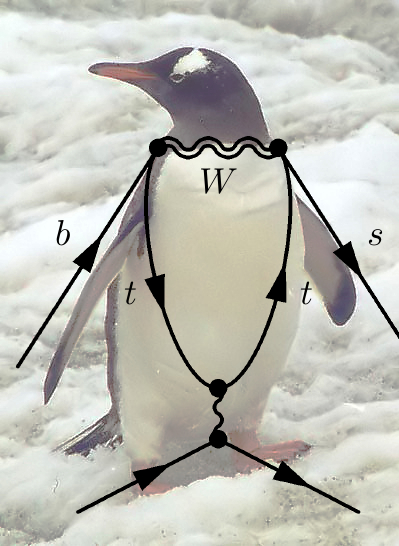 Who said scientists were boring? When particle physicist John Ellis, winner of the Maxwell Medal, Paul Dirac Prize and member of the Royal Society lost a bet over a pint to fellow Canadian Melissa Franklin, first woman to get tenure in physics at Harvard (and on the side DJ) she dared him to include the word "penguin" in his next publication. From the dates, she must have been a grad student at the time. From wikipedia:
"Mary K. [Gaillard], Dimitri [Nanopoulos] and I first got interested in what are now called penguin diagrams while we were studying CP violation in the Standard Model in 1976... The penguin name came in 1977, as follows.
In the spring of 1977, Mike Chanowitz, Mary K and I wrote a paper on GUTs predicting the b quark mass before it was found. When it was found a few weeks later, Mary K, Dimitri, Serge Rudaz and I immediately started working on its phenomenology. That summer, there was a student at CERN, Melissa Franklin who is now an experimentalist at Harvard. One evening, she, I, and Serge went to a pub, and she and I started a game of darts. We made a bet that if I lost I had to put the word penguin into my next paper. She actually left the darts game before the end, and was replaced by Serge, who beat me. Nevertheless, I felt obligated to carry out the conditions of the bet.
For some time, it was not clear to me how to get the word into this b quark paper that we were writing at the time. Then, one evening, after working at CERN, I stopped on my way back to my apartment to visit some friends living in Meyrin where I smoked some illegal substance. Later, when I got back to my apartment and continued working on our paper, I had a sudden flash that the famous diagrams look like penguins. So we put the name into our paper, and the rest, as they say, is history."
Onion Power
The largest onion processor in the US uses archaebacterial fermentors to convert their organic waste into methane for electricity production. Cool. Read all about it.
What products to they make? I want to buy onion and support these guys. Also when will I be able to get an onion powered car?
What products to they make? I want to buy onion and support these guys. Also when will I be able to get an onion powered car?
Tumor Immunology Is A Waste of Time
 Ian York recently wrote some interesting stuff about the interesting case of the transmissible tumours that are spreading in Tasmanian devils. The question is how are these tumours transmitted from one host to the next without being rejected by the immune system. He points out some pretty compelling evidence that this is not due to MHC homogeneity amongst the devil population. Therefore, the tumors are persisting despite being MHC mistmatched. In contrast, if you were to transplant normal tissue from one devil to another, it would be rejected by the recipient's immune system. And yet, for these tumors this is not the case. Apparently the same is true of a totally different type of canine transmissible tumor.
We shouldn't find this all that surprising. Tumor cells evolve resistance to almost anything you can throw at them, things that would kill normal cells. Their continued existence demands mechanisms of resistance to death by many diverse types of stimuli. There's only so many ways to kill a cell, so evolved resistance to one stimulus is often cross-protective against many others. The result is that everything down to the most fundamental metabolic processes of the cancer cell are adapted to surviving adversity. In light of this, you would predict T cells would have a hard time killing cancer cells.
Anyhow whatever the mechanism of resistance, all this is enough to convince me that tumor immunologists should give up on trying to make vaccines or other therapeutics that try to cure cancer by targeting "tumor" antigens. If tumors can escape MHC rejection, a natural, more specific and much more robust phenomenon, I find it impossible to believe that effective therapy will ever achieved by artificially stimulating the immune system to attack weak and largely self antigens. I suspect smart immunologists already know this.
UPDATE: In a follow-up post, York points out an important difference between transmitted and spontaneous tumors I hadn't fully considered. That is, the transmitted tumors have a much longer evolutionary history that spans multiple host generations, whereas a spontaneous tumor's evolution follows a blind alley that ends when the host dies. Therefore there has perhaps been greater opportunity for immune evading characteristics to emerge in what may be a more genetically diverse population of transmitted tumors. If this were true, the kinds of non-transmitted tumors we'd like to vaccinate against in humans wouldn't necessarily be as difficult to get the body to reject. At any rate, York remains optimistic re tumor immunology and promises to elaborate so stay tuned...
Wednesday, August 12, 2009
A Good Idea
"The LHB Program has two goals. First, it will provide PhD students with a working knowledge of the fundamentals of human biology and disease, primarily through a series of courses, to enrich their basic science training and broaden their research interests. Second, it will demystify the culture and practice of medicine, facilitating future collaborations with clinicians and physician-scientists, through activities designed to bring students into a hospital environment into direct contact with physicians, patients, medical students, and physician-scientists."
The Leder Human Biology and Translational Medicine Program is available to Harvard PhD students in the biomedical sciences. Do any Canadian institutions offer the kind of training described by LHB's second goal? It is more important than the first and should be the top priority for institutions purporting to train biomedical PhDs.
The Leder Human Biology and Translational Medicine Program is available to Harvard PhD students in the biomedical sciences. Do any Canadian institutions offer the kind of training described by LHB's second goal? It is more important than the first and should be the top priority for institutions purporting to train biomedical PhDs.
Carbonsink Concrete
One of the origonal posts on the bayblab, when it was just a babylab, was about concrete. Recently a company out of the UK has made cement that absorbs more CO2 than it produces in it's production. Essentially turning concrete into a carbon sink!
It is kind of scary to mess with such a fundamental material of man that has been slowly evolving since Roman times. Also if it costs significantly more I'm sure it will go nowhere, however the idea of a material as prevalent as cement being a carbon sink is inspiring.
It is kind of scary to mess with such a fundamental material of man that has been slowly evolving since Roman times. Also if it costs significantly more I'm sure it will go nowhere, however the idea of a material as prevalent as cement being a carbon sink is inspiring.
Subscribe to:
Posts (Atom)

 Podcast

 people visited the bayblab instead of doing their experiments


0 comments:
Post a Comment