Tuesday, April 03, 2007

Mitochondrial Madness

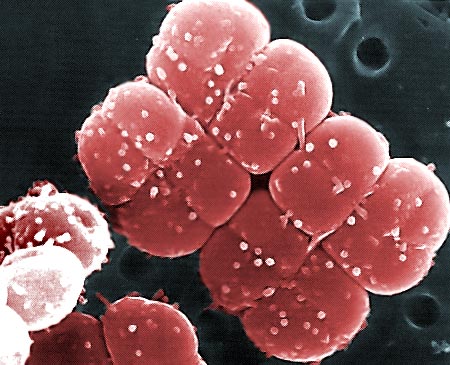
Our often-neglected bacterial endosymbionts the mitochondria seem to have their fingers in all aspects of eukaryotic cell functioning. Not only do they make us ATP and tell our cells when to die, they even have their own genome, which they can replicate, transcribe and translate all on their own. But mitochondria don't just use proteins encoded in their own genomes; they've also got some out on loan from the nucleus. And this is where the madness begins. Somehow this excellent Molecular Cell review on mitochondrial transcription found its way onto my lab bench, so I read it. Here are a few of the mind-blowing facts you can discover therein:


Also, check out this wicked album of artistic renditions of cells by Gary Carlson which I ganked the above photo from. Nice job Gary!


0 comments:

Who needs eyes when you have a tongue?

I remember reading about "hacking" your senses a little while back, and an engineer fan of the bayblab sent us this wicked article in Wired illustrating where the field has progressed since. The idea is that the brain is so plastic that it can adapt to process information, no matter where the signal is originating. Basically the brain is very good at processing signals. At first people experimented by implanting strong magnets under their skin and being able to "feel" magnetic lines to determine their orientation. Then someone had the clever idea of using the tongue for sensory input since it has dense nerve inputs to provide a "tactile display". By placing an electrical array on the tongue and relaying signals about your orientation it permitted its wearer to "see" in situations where visual cues are poor such as flying an airplane or diving. Interestingly it has found its way into medical use and is entering clinical trials : "The researchers started testing the device on people with damaged inner ears. Not only did it restore their balance (presumably by giving them a data feed that was cleaner than the one coming from their semi circular canals) but the effects lasted even after they'd removed the mouthpiece — sometimes for hours or days."
Obviously this would be great for blind people too. And I can only speculate about the pleasures of added tactile senses when combined with regular vision. You can read more about this sort of stuff on the author's blog...Also check out this guy who wants to hack your memory!!!


1 comments:

Synthetic Genetic Elements take over

A recent article in Science demonstrates propagation of a synthetic genetic element that replaces the endogenous genotype in drosophila in under 10 generations (subscription required). A freely available synopsis is here at The Scientist. The idea is that if, for example, a mosquito that is genetically programmed not to carry the malaria parasite were set off into the wild to replace disease carrying mosquitos it would not be successful because there is no reproductive advantage. Associating the genotype closely with this synthetic genetic element would make this genotype dominate. The system works by encoding two microRNAs (the 'toxin') that are expressed in the germline of the female. These microRNAs repress the expression of an gene essential for embyogenesis, so the system also encodes for a microRNA resistant form of that gene (the 'antidote'). Therefore a female carrying this genetic element can only produce viable offspring who carry the genetic element. In any case apparently if introduced at a minimal threshold level of 25% this element rapidly replaces the other genotypes. I'm still not sure exactly how this happens as you would think that a female that has less viable offspring than one that doesn't carry this element would make it less reproductively fit.


2 comments:

Monday, April 02, 2007

An end to the blood shortage?


I just saw this on digg, and was skeptical at first since it was published April 1st, but it's in both New Scientist and on the Nature website.
One of the barriers to an abundant blood supply for transfusion (other than a donor shortage) is immunological reaction to incompatible blood types. Type O, or universal donor blood lacks the A and B surface antigens, minimizing the risk of immune rejection. Scientists have now found a way to strip the A and B antigens from blood using bacterial enzymes, essentially turning any blood into Type O.

From the Nature article:

Type O is the most common blood group, but stocks constantly run low because it is used in all emergency situations where there is no time to determine the patient's own group.

An additional pressure on type-O blood, particularly in the United States, comes from the mismatch between blood donors and recipients. Most US donors are Caucasian, amongst whom 45% of people are blood group O. But more than half of African Americans, and nearly all native Americans are O, and so require type-O blood.


While blood donors are always needed, this new technology, if it pans out, should ease some of the burden on the system. It is currently in early stage clinical trials.


2 comments:

Alcoholism & Evolution


I had this theory that maybe an abundance of
addictive behaviors persist in our society because there is some
benefit to having addictive behaviors (bay conversation, unpublished).
Of course they can be detrimental, but in the right environment they
would confer some reproductive advantage in early humans or even in
modern society. Anyways there is a great
article on the genetic susceptibility to alcoholism in scientific
american
. The article talks about GABA receptors and how they
might play a part in addiction. And
interestingly this article summarizes some information
implicating GABA receptors as an important ingredient in human brain
evolution
. Obviously no solid connection but I wonder if anyone
thinks about this kind of thing when they are looking at complex
behavior and if predisposition to these behaviors should be ‘cured’.


2 comments:

Sunday, April 01, 2007

Bayblab open for business

In order to cover the rising costs of the podcast production, the Bayblab has decided to get into the alternative medecine business. After months of formulation in the bay, we have finally perfected the Amino-Rx, a drug based on unreleased papers from Darwin himself, kept secret until now. Consisting of a complex mixture of right-handed amino acids, the Amino-Rx will prevent the evolution of new life-forms and stop evolution of current ones. Have you ever been scared a new life form would pop-up in your jar of peanut butter, your dirty fridge or the unwashed dishes that have been lying in your sink? Well worry no more, spray the Amino-Rx on these surfaces and prevent de-novo life formation! In fact buy one bottle today for 3 easy payments of $99.99 and we'll send you a free drawing from rob featuring unicorns and rainbows.


8 comments:

Friday, March 30, 2007

Quack of the week

This week's quackery is a bit less expensive, and a little less dangerous and it looks like a small purple dildo. The Tesla purple personal oscillator can not only serve as a sex toy but apparently also as an electro-magnetic shield, and an energy source. According to Life technology (TM), this invention comes from exclusive papers from Tesla himself. He must be oscillating in his grave. According to the company "The Tesla Purple Energy Shield™ emits vast quantities of energy, which directly repairs, strengthens and protects the energetic fields of the human mind body and soul". Wow a new energy source you're thinking, finally we can wean ourselves from fossil fuels.

How does it work? : "The Tesla Purple Energy Shield™ outer shell is made of aluminium, which is first anodised (electrolytic oxidation) and then colored. The spin of the atoms and electrons of the aluminium is thus changed in such a way, that The Tesla Purple Energy Shield™ is said to vibrate in resonance with the fundamental energy (Chi, Prana, Orgon) of the universe. (...) With anodising, the field of the plating is changed and interacts with tachyons. The surface of the plating has a unique crystal-structure."
Wow now this is cool, I didn't remember reading about this in quantum mechanics, but I love to think that the anodization of my beer can will create faster than light particles.

What does it do? : well many things, but my personal favorites is that it repairs DNA and retards aging! Wow somebody needs to send one to Aubrey De Grey. "will support the immune system and physical healing (e.g. headaches, cuts, wounds, fractures etc.)". Notice how all these quacks always refer back to the immune system...

How do we measure the effect? : "the use of The Tesla Purple Energy Shield™ will eventually raise your frequency rate of angstrom units per second." hmm lets see, yeah frequency rate, you mean Hz or something (oscilation/second)? hmmm angstrom per second, you mean speed? Like on the highway my car goes at 2.7e11 angstrom/sec. I'll tell that to the cop next time...

At 179$ I don't see how anyone could pass this up.


6 comments:

Thursday, March 29, 2007

Urine does not contain many pathogens


This is just a response to the fact that there is now a sign in the shared washroom in the lab that basically tells people to keep the washroom as clean as possible. Nothing wrong with that.
However the very first sentence of the sign reads,"Urine contains many pathogens." It doesn't. Unless of course you have a urinary tract infection, however this would be tough to spread to another person through urine on a toilet. I would just find it embarrassing that on a floor full of scientists and support staff there is something that is just scientifically untrue. If a visiting scientist has to relieve him or herself here they will think less of our institutes scientific knowledge, and perhaps of our sanitary practices since apparently they warrant a refresher on using the loo.
Maybe we need the sani-seat toilet.
Speaking of toilets and stuff, I think that we should all be responsible and get a bio-toilet.


2 comments:

Cool lab video


0 comments:

Wednesday, March 28, 2007

Lichty's Polydnavirus infection


At a recent oncolytic virus conference in Arizona I drank a beer (or two) with Dr. Brian Lichy from McMaster University. He was pretty excited about a pretty strange group of viruses known as polydnaviruses. These guys have a pretty interesting life cycle and are required for reproduction in some endoparasitic wasps, essentially becoming part of the wasp.


0 comments:

Don't use eGFP.


PLoS ONE has a great paper on eGFP overexpression inhibition of polyubiquitination both through Lysines 63 & 48.
Overexpression of this super popular fluorescent reporter protein effects polyubiquitination and the subsequent digestion via the proteasome to a degree that it signifantly stabilizes p53 and increases p53 downstream signalling.
Crazy. I wonder how it inhibits ubiquitination.


0 comments:

Determinants of agressivity

Dr Mike Eslea in Lancashire is an expert on aggression. He has shown in the past that direct or indirect exposure to violence on TV can influence how aggressively you'll respond to a stimulus. He's also shown also that children with severe behavioral problems fail to respond to positive or negative reinforcements. And we've all witnessed what kind of adults those make. There is even evidence that psychopathic behavior can be the result of brain lesions. In his latest research he's also shown that short people are not more aggressive than tall people. It seems science has busted this urban myth. In fact when prompted with an aggressive stimulus, the heart rate of tall man climbed faster than that of short man. The "chopstick" game they played consisted of hitting each other's knuckles with sticks! However I suspect that differences could be due to physiology rather than aggressiveness. I wonder also if it would be different if the short man were in presence of tall man at the time.


0 comments:

Tuesday, March 27, 2007

IA updates

Once again some great IA updates. I love the firefox extenstions.


0 comments:

Koreans Clone Again


A good friend of mine is leaving soon to go to South Korea, land of the cloned poodle. Reports today indicate that this group, once associated with controversial Woo Suk Hwang succeeded in cloning a wolf. Wolves have not been spotted in the wild in Korea in 2 decades and the lead researcher argues that cloning could help them and other endangered species survive. The results will be published in an upcoming issue of "Cloning and Stem Cells." Let's just hope they don't get their hands on any velociraptor DNA.

In semi-related news, researchers in Nevada have created a chimeric sheep that's 15% human in the hope that future advancement of the technology, achieved by injecting human cells into a developing sheep fetus, can be used to grow matched tissue for organ transplantation. This comes just a year after Bush urged a ban on human-animal hybrids in his 2006 State of the Union.


1 comments:

Monday, March 26, 2007

Bacteria Use RNAi-Like Mechanism to Ward off Viruses

I vaguely remember Rob blabbing in the bay about the RNAi system being an ancient and conserved mechanism by which cells defend themselves from viral infection. Maybe I will start paying more attention to this blabbing now, because I just read an article in Science that suggests that this idea may amount to more than the mere rantings of a degenerate graduate student. While the RNAi machinery of eukaryotic cells has been thoroughly described and well-documented to play a role in anti-viral defence, this recent paper provides the first evidence to my knowledge for an RNAi system in prokaryotes, and its role in anti-viral defence. Interestingly, the system appears to involve integration of phage sequence into the bacterial genome into regions known as "clustered regularly interspaced short palindromic repeats", which can then serve as a template for the production of short interfereing RNAs targeting phage mRNAs. Thus the system appears to be a primitive form of cell-autonomous immunological memory which protects against repeated viral infection.

Once again, a bayblabber is the first to predict a major breakthrough in biology. Now, if you can outline a full mathematical model describing the dynamics of the interaction between viral quasispecies and the host cell RNAi machinery, then I'll be impressed.


2 comments:

University of Ottawa Researcher Blazing a Trail Through the Human Interactome

While the yeast protein interactome has been exhaustively mapped by a number of research groups using several approaches, the larger and more complex human interactome has yet to be conquered. Taking a step forward in this direction, a group led by University of Ottawa Prof and Ottawa Institute of Systems Biology director Daniel Figeys has published the interactomes of 338 proteins in NPG's Molecular Systems Biology. The set of 6486 interactions between 2371 proteins was mapped using a high-throughput immunoprecipitation/mass spectrometry approach. That's 1% of the human interactome down, 99 more to go!


0 comments:

Semi-identical twins

Fraternal twins occur when 2 eggs are fertilized by 2 sperm and carried to term. Identical twins arise when one egg is fertilized by one sperm and the embryo splits at a later stage. Scientists had previously hypothesized and recently discovered a new type of twinning: semi-identical twins. In this case the twins are chimeras, containing populations of cells that are either XX or XY. The proportion of cells of each type varies from tissue to tissue. Researchers believe that this is the result of a single egg being fertilized by two different sperm and each sperm has contributed genes to each child. While one of the twins is a true hermaphrodite, both babies' growth and mental development seem normal.


0 comments:

Sunday, March 25, 2007

Scientists Who Share Are More Successful

Want to increase your citation rate and the impact of your science? This new publication shows that scientists who made their microarray data publicly available increased the citation rate of the associated paper by 69%, compared to those who witheld the information. This effect was shown to be equivalent to publishing in a journal with double the impact factor, an impressive statistic indeed.


0 comments:

Radioresistance


A paper in PLoS Biology demonstrates that Deinococcus radiodurans, a radiation resistant bacteria is not resistant to radiation due to better DNA repair. Surprising, to me, since I always thought this was the power of radiation in order to sterilize foods ect. Apparently it is protein oxidation causes the effectiveness of irradiation, and radiodurans uses a Mn redox cycle to effectively protect proteins but not DNA.


0 comments:

Saturday, March 24, 2007

Bayblab Threathened of Legal Actions -updated

Breaking news! Finally somebody understands how much a couple of graduate students working on cancer with a blog are a powerful authority. It was about time something was done to stop this nonsense. Here is the history of what happened when William O'Neil who has accumulated quite a reputation with his alternative therapy to cancer, and his attacks against a blog run by graduate students actually doing work on cancer.

On March 24th, at 10:51:31 AM somebody with the IP (70.53.21.88) who uses a dsl line with Bell Canada (sympatico Hi-speed edition!) and lives in Ottawa, Ontario stumbles upon the Bayblab. The person in question uses a windows XP machine, a screen resolution of 1280X1024 and Microsoft internet explorer 7.0. I warmly recommend to use firefox over MSIE 7.0 by the way.

At 10:51:45 AM He does a search on google.ca/blogsearch for "Canadian cancer research group"

At 11:00:29 AM He looks on technorati for who lists the bayblab as their favorite, come up with a name of a fan of the bayblab.

at 11:41:50 William O'Neil then sends an email to the yahoo account of the fan saying something like this: "If you don't remove all material concerning me or my company by monday March 26th, I will sue you for defamation". The crazy part is that the website was not even setup by that person so he's threatening the wrong person. I guess he has no other name to go by.

At 12:32:31 He does a search on the bayblab looking for "O'Neil". Too bad that name is never mentioned by us just quoted ad verbatim from quackwatch.

At 12:33:27 He puts an "anonymous" comment on the blog: "hey fuckwad! post a peer reviewed study demonstrating the efficacy of chemotherapy. goodluck...." Ouch somebody called me fuckwad, that's rude, my feelings are hurt. Yet another chemotherapy denier!

Geez thank god the internet is not anonymous...Somebody got his IP blocked!!!

March25th:
BREAKING NEWS, seems our admirer is not only harassing some of the OHRI senior scientists but is also trying to manipulate some of our employer (which is an offense under canadian law) and trying to get us fired by contacting Dr. Worton, the CEO of the OHRI. Little does he know that the OHRI's legal department does not care about this, and all he is doing, is angering people higher up.

Due to inadequate libel laws and lack of regulation of alternative medecine here in Ontario, quackery can prevail and free speech is muffled. I decided to slightly modify the post as a precaution. Just shows how antiquated the laws are in Canada and in the USA. Mr Oneil is actually operating his clinic within the law (or gray area), for the time being.

March 26th:
It seems Mr. O'Neil has nothing better to do than harass cancer researchers (from his work at 24.235.122.122). He sent another email this time claiming that he owns copyrights to his name and the name of his company. However according to Canadian law "Titles, names and short word combinations are usually not protected by copyright. A "work" or other "subject matter" for copyright purposes must be something more substantial. "
Links, Url and metatags are definitely not protected under copyright law in Canada. I guess this man just can't handle criticism by real scientists... how about you justify your claims Mr' O'Neil.
Has your method been published in any peer-reviewed publication? How do vitamins and amino-acids contribute to treating cancer and what is the efficacy? We'll gladely invite you to the podcast if you want to debate with real scientists.


15 comments: